PURPLE HEART
PURPLE HEART
DURATION
10 min.
INSTRUMENTATION
1.2/Pic, 1.2/Eh, 2, 1.2/Cbn; 4, 1.2/Pic, 3, 1; Timp+3; ST (14,12,10,8,6)
SCORE AND PARTS
Available at Donemus
ABOUT
My father William Knehans fought as an Army Corporal in the battle of Okinawa, one of the bloodiest and fiercest of the Pacific theatre of WWII with over 49,000 casualties.
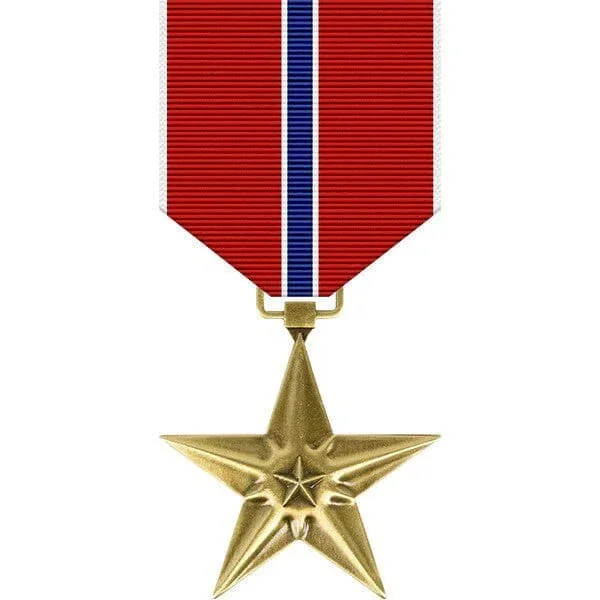
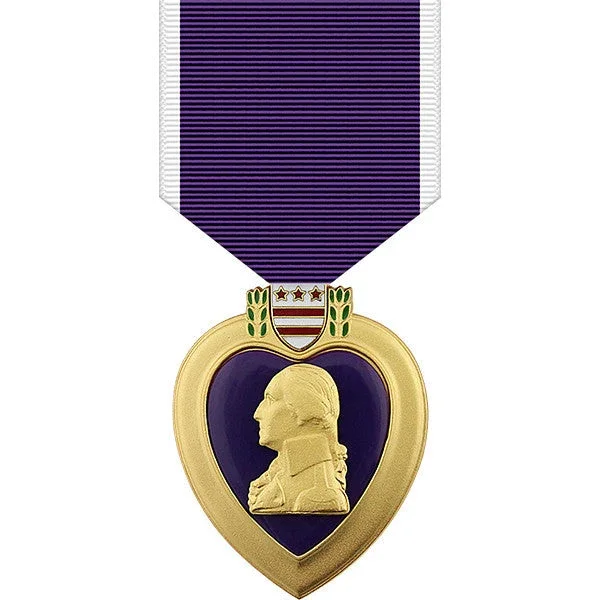
My father fought in the closing days of this battle. He was wounded with a gunshot to his leg in the rescue of a fellow serviceman. He was awarded the Purple Heart for being wounded in battle and the Bronze Star for demonstrating bravery and courage in battle.
The work outlines what I imagine as my father's experience—he was notoriously uncommunicative about this traumatic war experience. The piece is in eight sections:
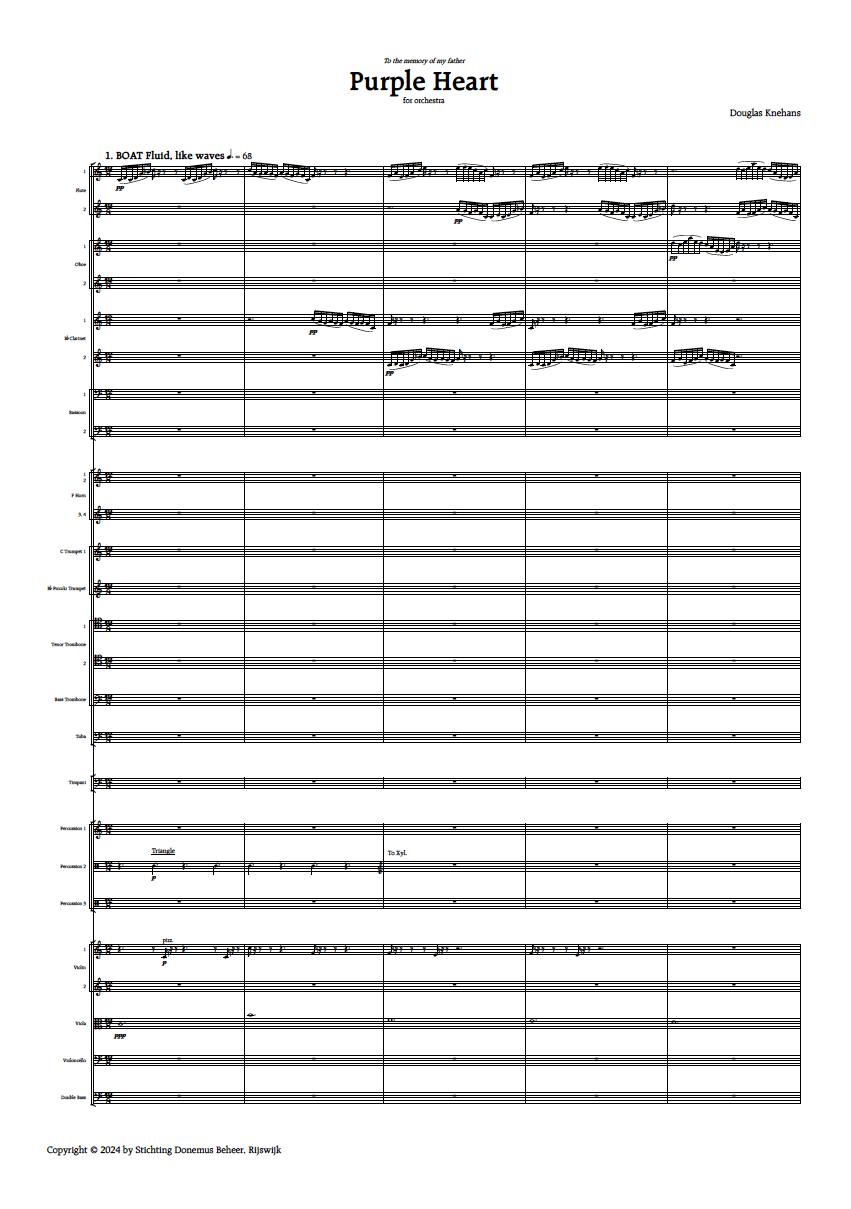
1. BOAT portrays the sea voyage to Okinawa
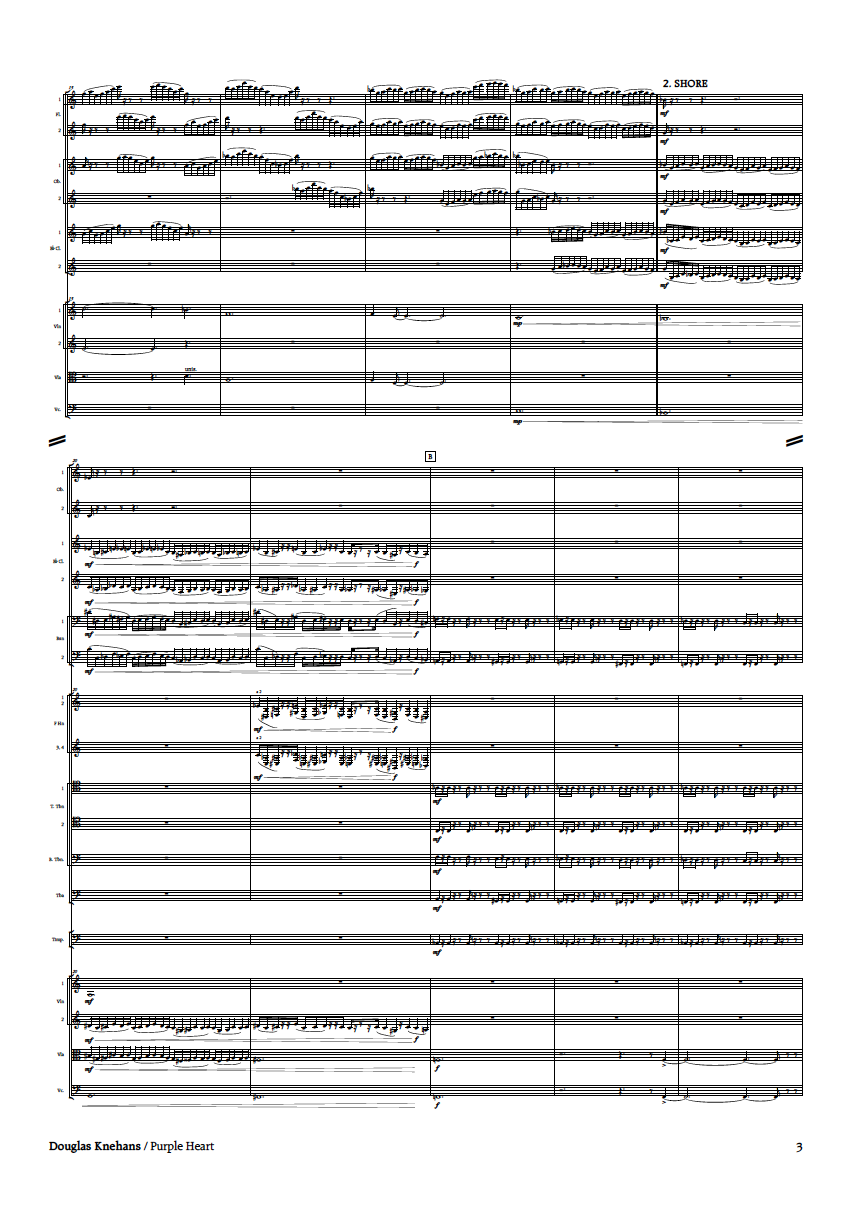
2. SHORE portrays his landing on shore and ends with a "heartbeat" idea that becomes transformed in
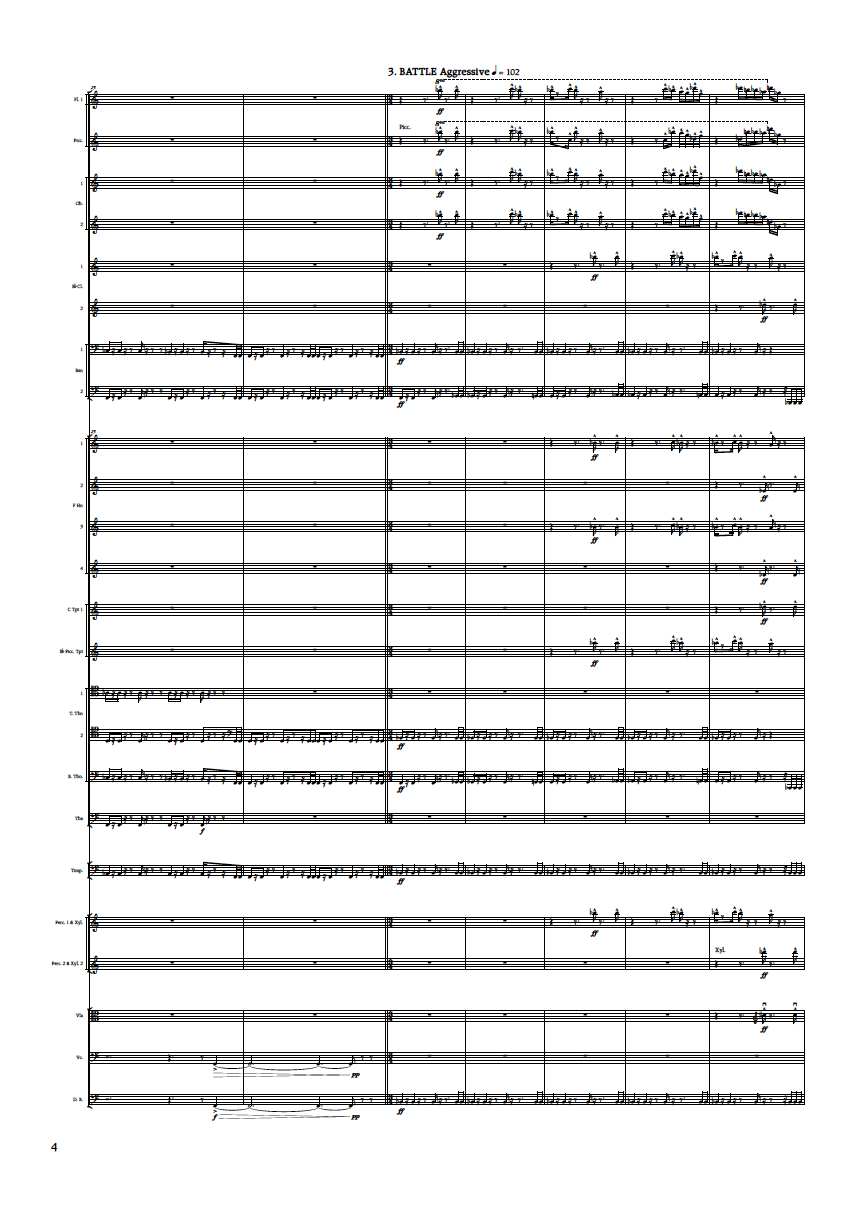
3. BATTLE which depicts his heightened and arhythmic (panicked?) heartbeat as he takes fire from the enemy on the beach.
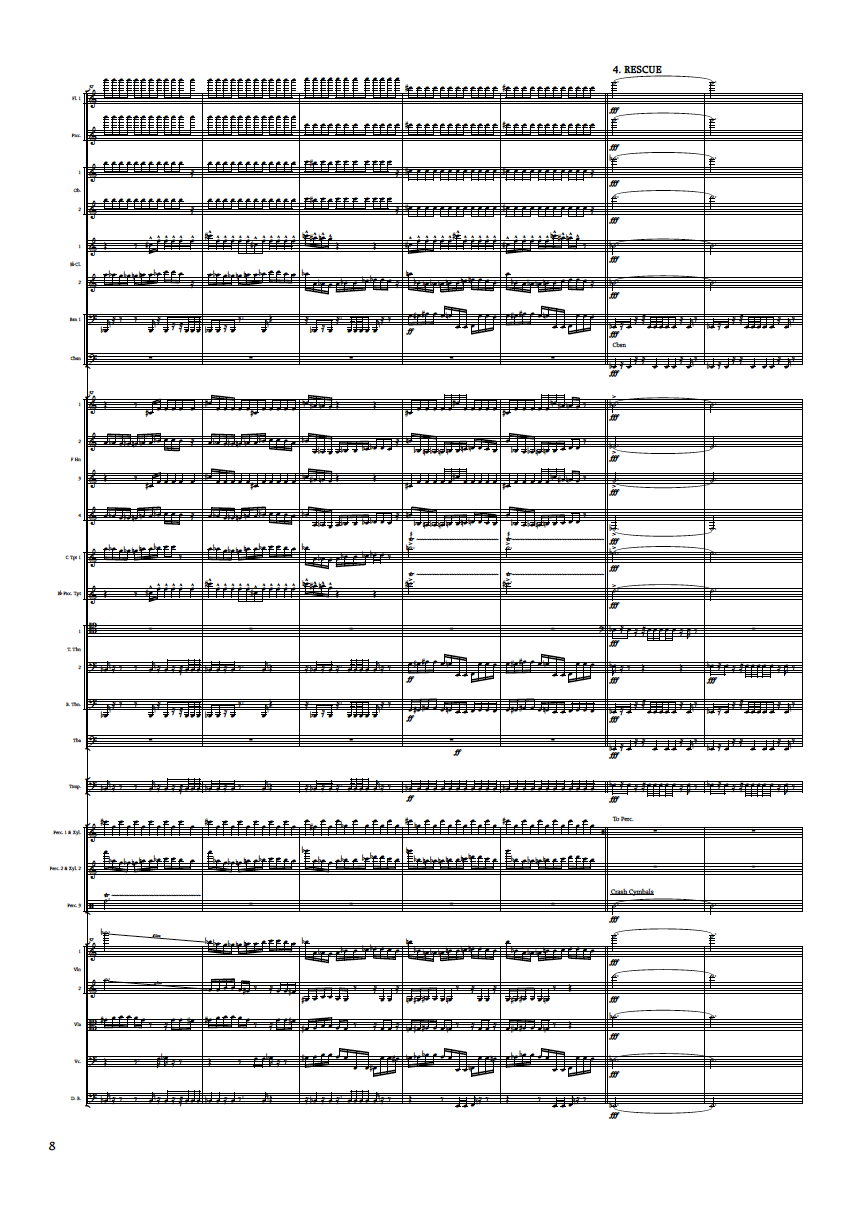
4. RESCUE portrays his rescuing a fellow serviceman, his heartbeat still elevated but normalizing and finally calming as he withdraws from direct threat.
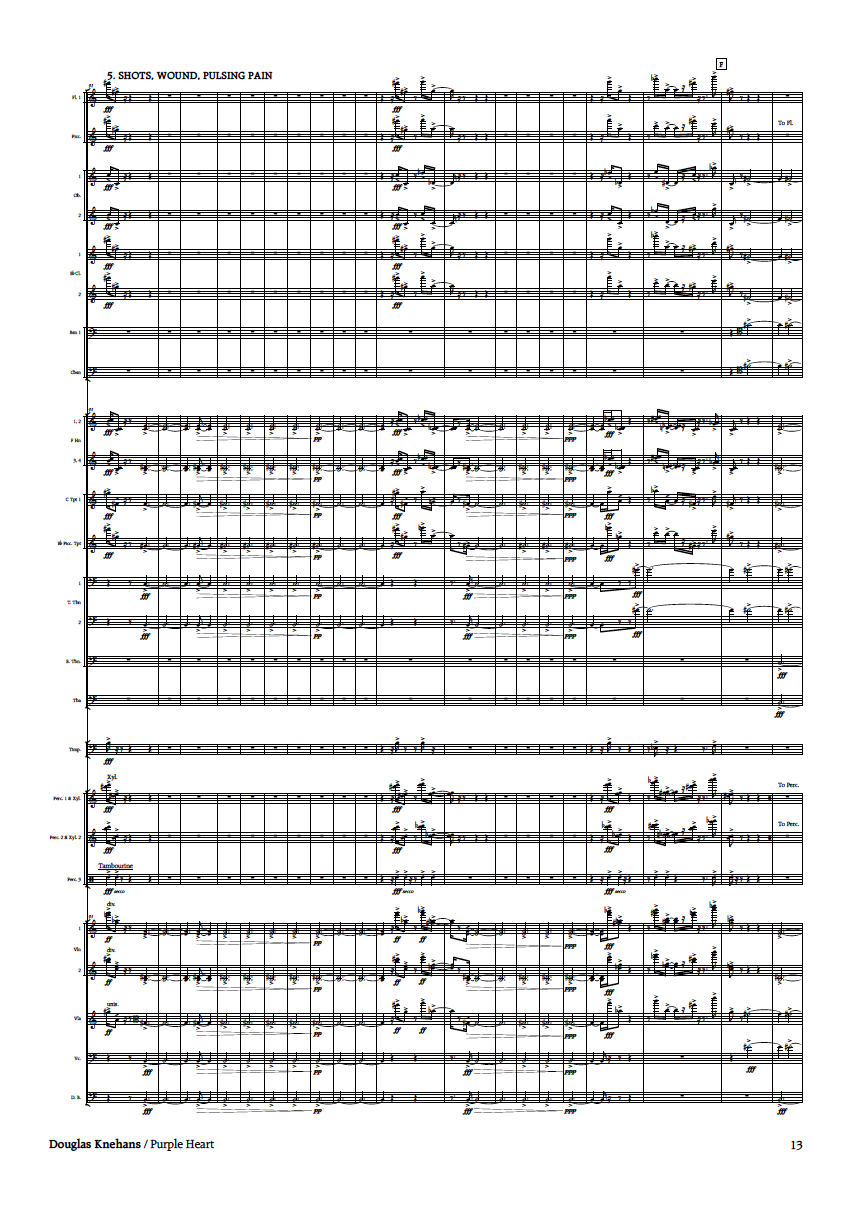
5. SHOTS, WOUND, PULSING PAIN seeks to portray his being fired upon and hit and the sharp intensity of pain from those shots.
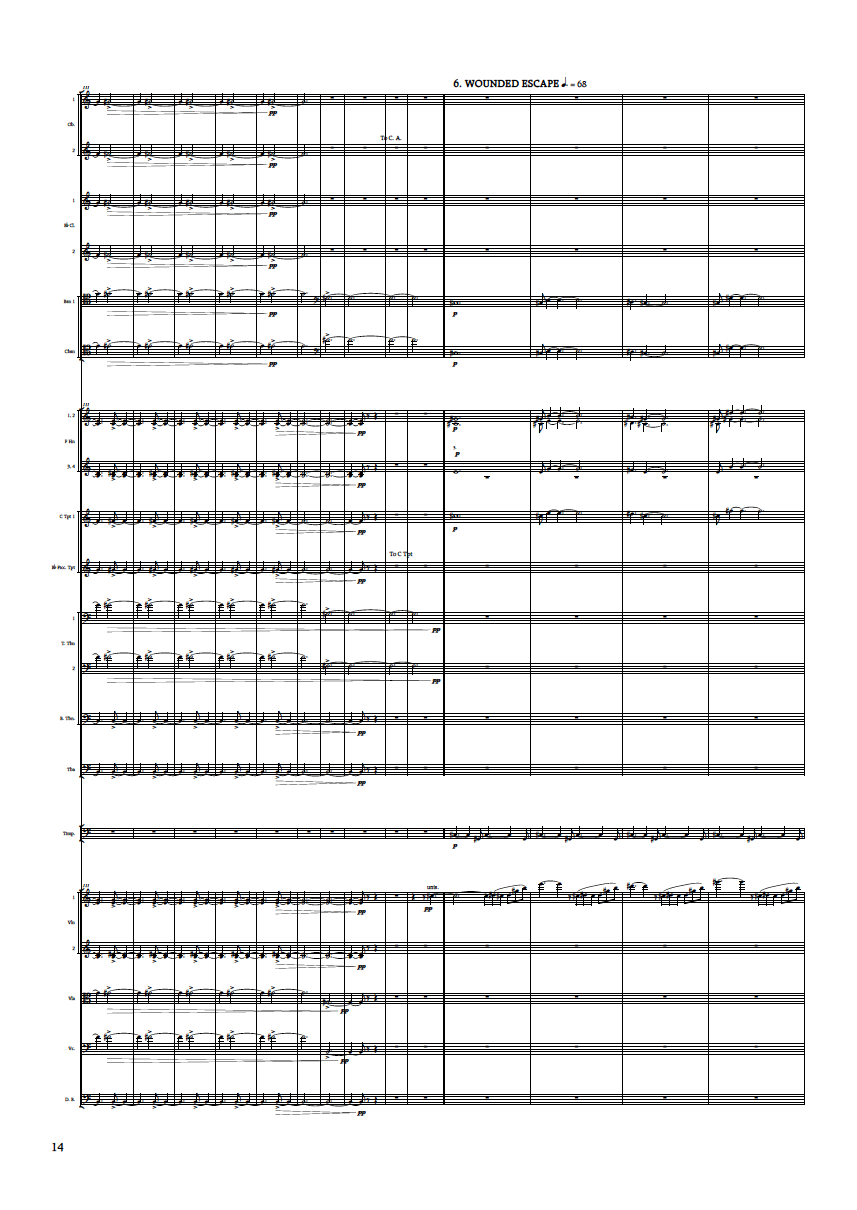
6. WOUNDED ESCAPE follows his limping path to actual safety while recalling the BOAT theme in a varied form reflecting on how this journey has transformed him.
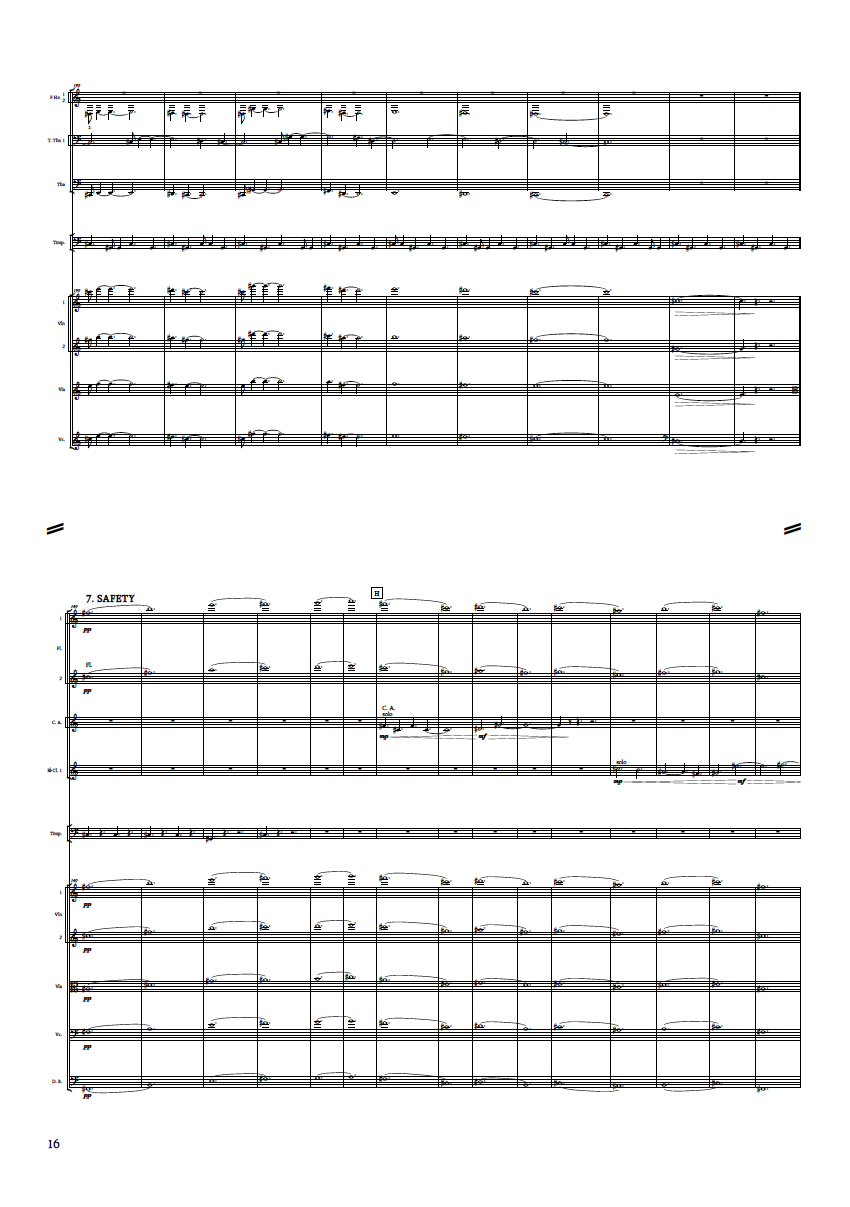
7. SAFETY depicts his arrival in a safe place not open to any assault or gunfire.
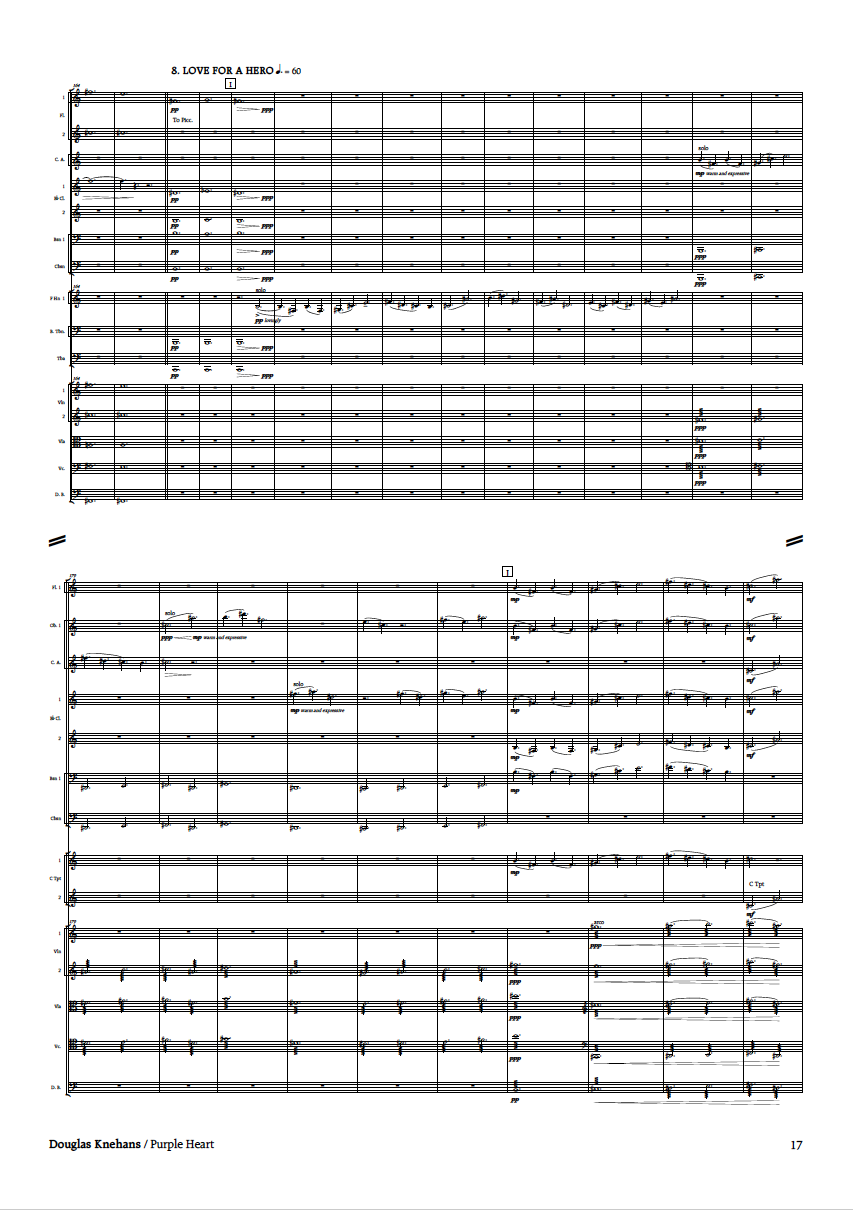
8. LOVE FOR A HERO is a short section that depicts my love for his bravery in defending our country and my pride in his courage and strength.
My father was only 18 years old when he experienced these traumatic events. I cannot imagine how this transformed his life, his psychology, his emotions and all of the feelings that accompanied him for the rest of his days. What I do know is that he enlisted to do the right thing for our country and risked his life doing so. I will be forever proud to be his son.
1. BOAT
2. SHORE
3. BATTLE
4. RESCUE
5. SHOTS, WOUND, PULSING PAIN
6. WOUNDED ESCAPE
7. SAFETY
8. LOVE FOR A HERO
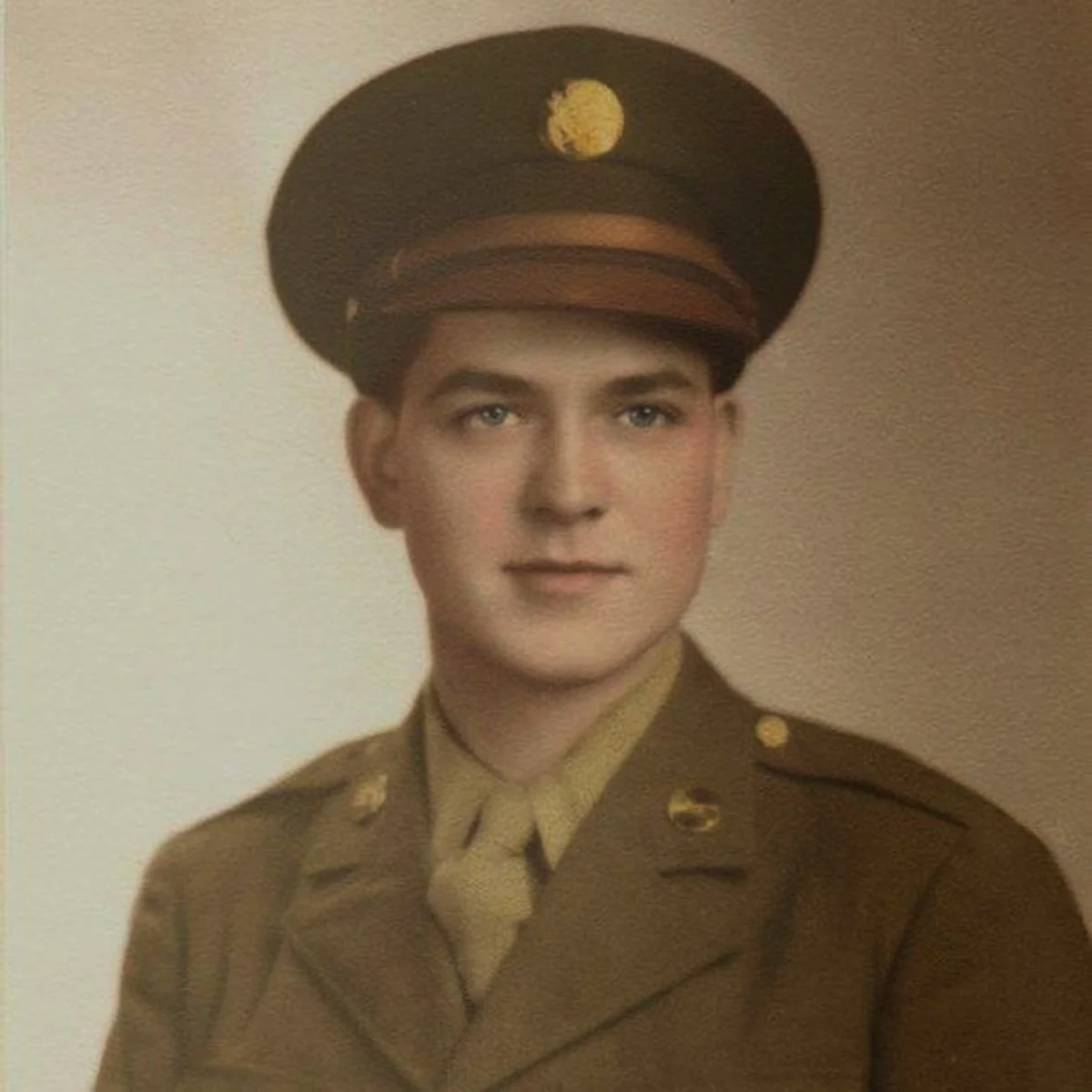
THE HERO
WILLIAM D. KNEHANS was my father. He enlisted in the Army in 1944 and was sent to Okinawa in the closing days of the war. There, he fought valiantly for his country and his fellow servicemen.
My father was a very private man when it came to the memories of the war. He could barely touch the issue without becoming emotional and so we almost never broached it. What we do know is that he fought on the beaches of Okinawa, was wounded, helped a comrade out of the way of danger and was awarded the Bronze Star and Purple Heart for his actions in that bloodiest of battles.
He returned to the USA a hero at the end of the war and was given an honorable discharge from the Army after his service.
He went on to raise a family and become a successful business manager in St. Louis. In the early 1970’s he relocated with his family to Australia which he made his new home. After a successful business management career in Australia, followed by a joyous and peaceful retirement, he passed in 1997, leaving behind his wife and four children.
COMPOSER
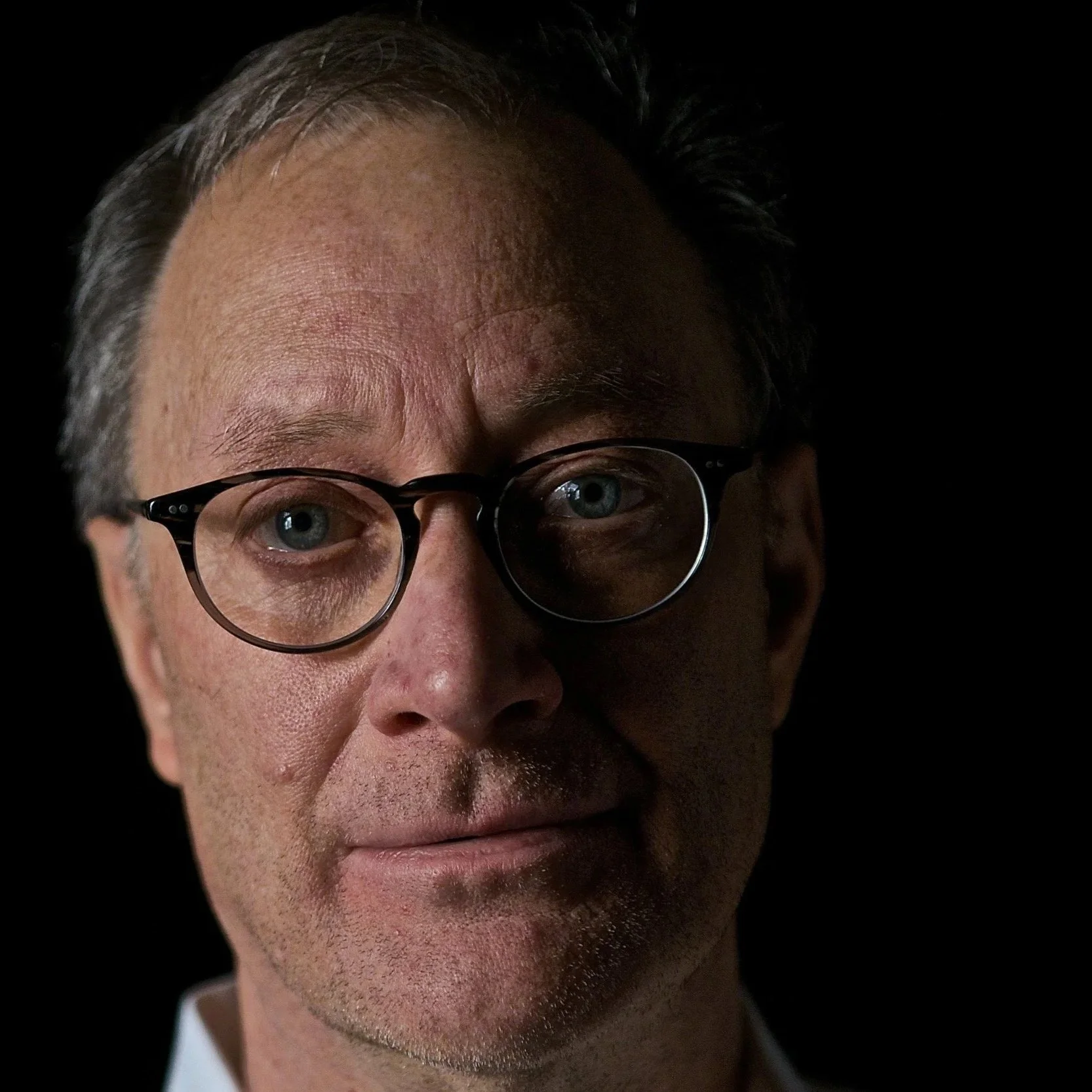
DOUGLAS KNEHANS is an American-Australian composer whose music has been performed, recorded, and broadcast worldwide by leading orchestras, opera companies, chamber ensembles, and distinguished soloists. Hailed by The New Yorker for its "primitive force and melodic insistence that recall Stravinsky," his music has earned international recognition through performances, recordings, broadcasts, and awards including The American Prize, ISCM World Music Days, the Kennedy Center, New Music USA, the National Endowment for the Arts, and the Australia Council for the Arts. He is the founder and Artistic Director of ABLAZE Records, and his music is distinguished by dramatic intensity, architectural clarity, expressive immediacy, and exceptional orchestral craftsmanship.
Recent major orchestral recordings include his searing Cloud Ossuary: Symphony No. 4 the triptych Unfinished Earth: Symphony No. 3 and the flute concerto Tempest, recorded by London Symphony Orchestra Principal Flutist Gareth Davies with the Brno Philharmonic; Dark City: Cello Concerto No. 2, recorded by Grammy Award-winning cellist Zuill Bailey and the Royal Scottish National Orchestra; Ripple: Symphony No. 1 with the National Symphony Orchestra of Ukraine; and Drift for oboe and strings, performed by Cincinnati Symphony Orchestra Principal Oboist Dwight Parry under the baton of Awadagin Pratt.
Gramophone has described Knehans as "a composer of considerable fluency and instrumental imagination," while Fanfare hailed his music as "...radiant and multicolored. This is music of tremendous imagination. Knehans scores with a masterly hand, his sound paintbrush unerringly hitting the mark."
His artistic career has been recognized through prestigious residencies and fellowships at the MacDowell Colony, the Banff Centre for Arts and Creativity, Meet the Composer in New York, and the 1995 Boulez/IRCAM Carnegie Hall Residency devoted to Pierre Boulez's ...explosante-fixe.... In 2025 he was named Wachtmeister Fellow at the Virginia Center for the Creative Arts. He has appeared as featured guest composer at international festivals in Ukraine, Poland, Australia, and the United States, and at leading universities throughout the world.